
NSF CARSE Researchers Awarded Catalyzer Grants for Innovative Research Projects
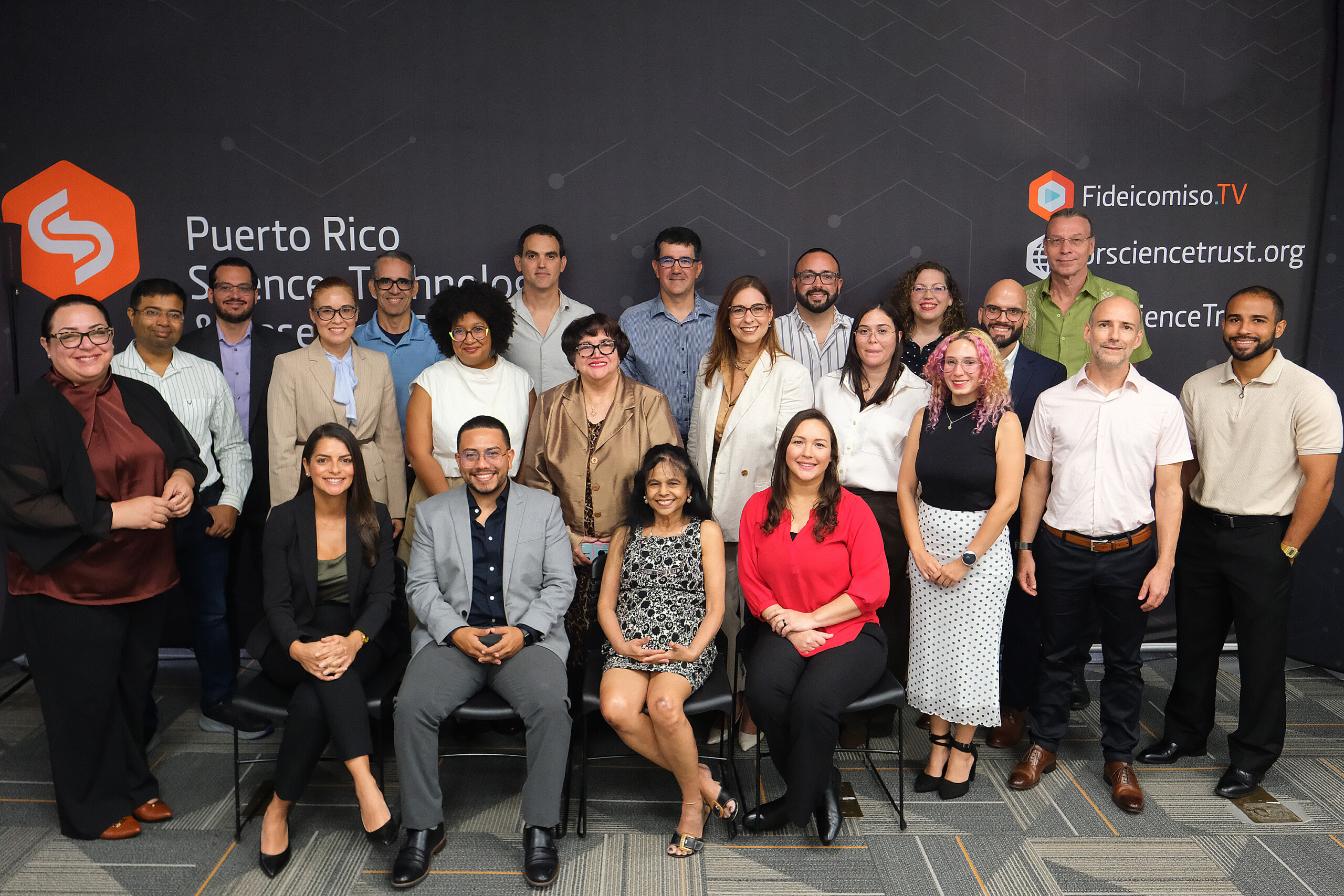
Dr. Jesus Antonio Sanchez-Perez and Dr. Luis Esteban Hernández, researchers affiliated with NSF CARSE at the University of Puerto Rico at Mayagüez, have received Catalyzer Research Grants to advance innovative projects in wearable respiratory monitoring and hardware security for battery-free Internet of Things (IoT) devices.
Two researchers affiliated with the U.S. National Science Foundation Center for Advanced Radio Sciences and Engineering (NSF CARSE) at the University of Puerto Rico at Mayagüez (UPRM) have been selected for funding through the Catalyzer Research Grant Program of the Puerto Rico Science, Technology & Research Trust.
Dr. Jesus Antonio Sanchez-Perez received a $70,000 grant to advance wearable technology for continuous asthma monitoring, while Dr. Luis Esteban Hernández received $64,168 to develop ultra-low-power hardware security solutions for battery-free Internet of Things (IoT) devices.
Their projects reflect the breadth of research conducted by NSF CARSE-affiliated investigators and highlight the potential of engineering innovations to address challenges in healthcare, secure electronics, and emerging technologies.
Advancing Continuous Asthma Monitoring Through Wearable Technology
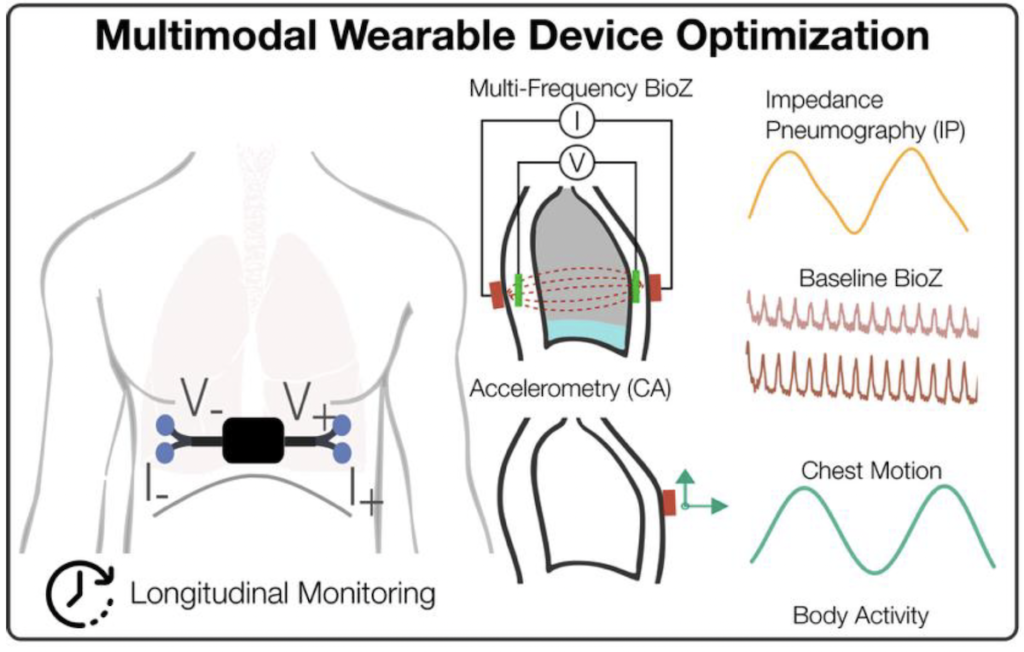
Dr. Jesus Antonio Sanchez-Perez, Assistant Professor in the Department of Electrical and Computer Engineering at UPRM, is leading the project “A Pilot Study of a Wearable Multimodal Device for Continuous Asthma Monitoring in Puerto Rico,” supported by a $70,000 Catalyzer Research Grant.
Asthma remains one of the most significant chronic diseases affecting children, particularly in Puerto Rico, where the burden of the condition exceeds U.S. averages. According to the project’s research abstract, children in Puerto Rico are 1.6 times more likely to develop asthma during their lifetime and four times more likely to die from asthma.
Although effective treatments are available, symptoms frequently go unrecognized, limiting opportunities for timely and effective management. Existing clinical measurement tools also face limitations in continuously monitoring respiratory health outside medical facilities.
To address these challenges, the research team aims to develop a wearable multisensor device that integrates multifrequency chest electrical bioimpedance (BioZ) measurements with chest accelerometry.
BioZ technology can capture changes in electrical properties associated with respiratory activity. However, these measurements are highly sensitive to body movement, which can affect their accuracy and reliability.
By combining BioZ measurements with contextual movement information, the proposed device seeks to overcome this limitation.
The project focuses on two primary objectives:
- Develop a wearable multisensor device that combines multifrequency chest BioZ measurements with contextual chest accelerometry.
- Develop a context-aware signal fusion algorithm that integrates both types of measurements to improve continuous respiratory monitoring outside clinical environments.
The research includes the participation of Dr. Stephanie Brown, Assistant Professor in the Division of Pediatric Critical Care Medicine at Emory University School of Medicine and an attending physician in the Pediatric Intensive Care Unit at Children’s Healthcare of Atlanta’s Arthur M. Blank Hospital.
This interdisciplinary collaboration brings together expertise in electrical engineering, biomedical sensing, signal processing, and pediatric medicine.
The expected outcome is the validation of a wearable monitoring system and multisensor fusion algorithm that could contribute to future advances in asthma detection, monitoring, and management.
The project will run from August 21, 2026, through August 31, 2028.
Developing Ultra-Low-Power Hardware Security for Battery-Free IoT Devices
Dr. Luis Esteban Hernández, a researcher affiliated with NSF CARSE at UPRM, received a $64,168 Catalyzer Research Grant for the project “Ultra-Low-Power Hardware Security Primitives for Battery-Free IoT Devices.”
Battery-free Internet of Things (IoT) devices are emerging as promising technologies for infrastructure monitoring, environmental sensing, and secure asset tracking. Their ability to operate without conventional battery maintenance makes them particularly valuable for applications requiring long-term, energy-efficient operation.
However, these devices face a major challenge: conventional cryptographic security mechanisms often consume more power than battery-free systems can support.
To address this limitation, the project will design, implement, and validate a compact integrated circuit that combines two hardware security technologies:
- True Random Number Generator (TRNG): Generates unpredictable random values that can support secure cryptographic key generation.
- Physically Unclonable Function (PUF): Uses inherent variations introduced during semiconductor manufacturing to generate device-specific signatures for identification and authentication.
These technologies will be integrated through an RTL-based SPONGENT hash engine, enabling secure key generation and device authentication while maintaining ultra-low-power operation.
The proposed TRNG uses intrinsic analog variability in a comparator-based architecture and has demonstrated compliance with NIST statistical tests at the schematic level across process, voltage, and temperature variations.
The PUF, meanwhile, leverages manufacturing variability in regulated supply generation and timing behavior. Configurations associated with a low-power Low-Dropout Regulator (LDO) and oscillator enable the extraction of distinctive device signatures while maintaining low energy consumption.
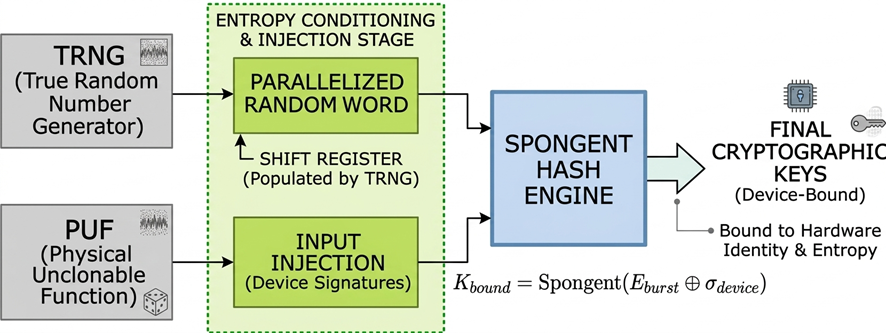
As part of the research, the team will implement a compact integrated circuit through a mini-ASIC tapeout, allowing the proposed security mechanisms to be experimentally evaluated in physical silicon.
The validation process will examine critical performance characteristics, including the entropy and statistical properties of the TRNG and the uniqueness, reliability, and stability of the PUF.
The expected results could establish a foundation for secure identification and key generation in battery-free IoT devices, while supporting future research opportunities in hardware security and mixed-signal integrated circuit design.
Supporting Scientific Research and Innovation in Puerto Rico
The Catalyzer Research Grant Program, administered by the Puerto Rico Science, Technology & Research Trust, supports innovative scientific and technological projects with the potential to generate preliminary results, validate emerging concepts, and strengthen opportunities for future research funding.
The selection of Dr. Sanchez-Perez and Dr. Hernández highlights the contributions of NSF CARSE researchers to the advancement of engineering research at UPR-Mayagüez.
Although their projects address distinct challenges, both demonstrate how advanced sensing, signal processing, and electronic system design can contribute to practical technological solutions.
From improving respiratory monitoring for children with asthma to strengthening security in energy-constrained electronic devices, these initiatives underscore the importance of continued investment in scientific research and technological innovation in Puerto Rico.
Learn more about the Catalyzer Research Grant Program:
https://prsciencetrust.org/impulsando-la-ciencia-boricua-programa-de-subvenciones-para-investigacion-catalyzer-otorga-1-12-millones-a-proyectos-de-investigacion-local/